





Founding Family Medicine Residency Program Director, Infirmary Health
Mobile, AL




Position Overview
| Position | Founding Program Director, Family Medicine Residency Program Director |
| Institution | Infirmary Health, the largest non-governmental, not-for-profit health system in Alabama |
| Sponsoring Hospital | Mobile Infirmary Medical Center, a 689-licensed-bed medical center that ranks among the leading hospitals in Alabama for surgical volume |
| Location | Mobile, Alabama, on the Gulf Coast |
| Program | New Family Medicine Residency in development, seeking ACGME accreditation; target complement of 10 residents per class (30 at full build-out) |
| Timeline | Program Director begins 2027; target inaugural class summer 2028, subject to ACGME accreditation |
| Effort | Approximately 50 percent protected program director and administrative effort, 50 percent clinical practice |
| Reports To | Designated Institutional Official for academic and program matters; Infirmary Medical Clinics leadership for clinical practice |
| Search Partner | Academic Med (retained, exclusive) |
Position Summary
Infirmary Health, the largest non-governmental, not-for-profit health system in Alabama, seeks an accomplished family medicine physician educator to serve as the Founding Program Director of a new Family Medicine Residency Program at Mobile Infirmary Medical Center in Mobile, Alabama. This is a rare opportunity to design a residency from a blank page inside a health system that has already proven it can launch and grow graduate medical education: Mobile Infirmary opened an ACGME-accredited Internal Medicine Residency in 2024 that has grown to 96 residents in its first three years, welcomed its first General Surgery residents in July 2026, and operates a second Internal Medicine Residency and a Geriatric Medicine Fellowship at Thomas Hospital on the Eastern Shore, with additional fellowships now in development.
The Founding Program Director will lead the ACGME application and accreditation process, build the curriculum and clinical learning environment, recruit and develop the faculty, and recruit the inaugural resident classes, all while maintaining an active family medicine practice within Infirmary’s employed physician group. The program is designed for a target complement of 10 residents per class, with the Program Director beginning in 2027 and a target first class in summer 2028, subject to ACGME accreditation. An Associate Program Director has already been designated from within the system, and Infirmary’s GME office, led by a C-TAGME certified Director of GME Programs, provides the accreditation, coordinator, and compliance infrastructure that a new program needs on day one.
The ideal candidate is a board-certified family physician with meaningful residency leadership experience, whether as a program director, associate program director, or core faculty leader, who wants to build something that carries his or her imprint for decades, who is energized by a community health system with the clinical depth of a large referral hospital, and who understands that a program’s culture is set by its first director. Infirmary Health hopes to find a leader who sees this as more than a launch assignment: one who wants to guide the program through its first graduating class, help it mature, and become part of the Mobile community along the way.
This is more than a residency. The Founding Program Director will be establishing the primary care training backbone of a health system that intends to be the region’s academic and clinical leader for the next generation, with the institutional commitment, GME infrastructure, and clinical depth to make that ambition real.
Key Position Highlights
Ten reasons this role is different:
- Build from the ground up. Every element of the program, from the curriculum and the continuity clinic to the faculty model and the culture, will be shaped by its founding director.
- A proven GME launch platform. Infirmary has stood up an Internal Medicine Residency (2024), a General Surgery Residency (2026), a second Internal Medicine Residency at Thomas Hospital (2020), and a Geriatric Medicine Fellowship (2024), and fellowships in critical care medicine, hematology and oncology, and cardiology are now in development. The GME office, program coordinators, and institutional review structure already exist.
- Tertiary clinical depth in a community hospital. Mobile Infirmary is a 689-bed medical center ranked the No. 3 hospital in Alabama by U.S. News & World Report for 2026 to 2027, a Joint Commission Advanced Comprehensive Stroke Center, and a regional pioneer in robotic surgery, with the major adult subspecialties on campus.
- An established employed family medicine group with teaching interest. Infirmary Medical Clinics includes Diagnostic and Medical Clinic and more than 60 physician practice locations across Mobile and Baldwin counties, with established family medicine practices in Mobile, Saraland, and the Eastern Shore whose physicians have expressed interest in teaching.
- Space identified for the continuity clinic on the main campus, with additional outpatient training sites in the system’s community practices.
- A growing regional platform for rural training. In August 2026 Infirmary received more than $5.3 million through the Alabama Rural Health Transformation Program, including a Rural Physician Workforce Pipeline that funds structured rural clinical rotations for internal medicine residents, a Rural Women’s Health Hub, and women’s access-to-care initiatives across four counties, investments the family medicine program can build on as rural partnerships are confirmed.
- Physician-led culture. Diagnostic and Medical Clinic is physician governed, and physician leaders serve on Infirmary’s governing boards. Forbes named Infirmary Health to its 2026 list of America’s Best Employers by State, the fifth consecutive year the system has earned the distinction.
- A partner in academic oncology and research. Infirmary Cancer Care is affiliated with the UAB O’Neal Comprehensive Cancer Center, Alabama’s only NCI-designated comprehensive cancer center, and the system is building an office of clinical research to support scholarly activity across its programs.
- Leadership runway. As the system’s family medicine footprint grows, the Program Director will be positioned to shape population health, primary care service line development, addiction medicine (building on Infirmary’s existing collaboration with the Mobile County drug court), and future training programs.
- The Gulf Coast. Mobile is a 300-year-old port city with a nationally recognized quality of life, and the Eastern Shore communities of Fairhope, Daphne, and Spanish Fort are among the fastest growing in Alabama. The beaches of Gulf Shores and Orange Beach are about an hour away.
About the Program
The Family Medicine Residency Program at Mobile Infirmary is a new, three-year ACGME program currently in development. Its mission is to train broadly skilled community family physicians for Infirmary Health and for Alabama, prepared to practice in metropolitan and rural settings alike, with a strong continuity practice at the program’s core and the full-spectrum skills, including maternity care and procedural training, that rural communities require. Infirmary anticipates a target program size of approximately 10 residents per class at full build-out, with the final complement, leadership structure, faculty model, and program resources subject to institutional approval and ACGME requirements.
Program design
- Sponsoring institution and site. Mobile Infirmary Medical Center, with its Designated Institutional Official, Graduate Medical Education Committee, and GME office providing institutional oversight.
- Inpatient experience. A planned dedicated family medicine inpatient service at Mobile Infirmary, structured so that family medicine residents have their own patients, faculty, and unassigned admissions rather than competing with the Internal Medicine Residency for cases, with shared didactics where they add value.
- Continuity clinic. Space identified on the Mobile Infirmary campus, to be staffed by program faculty, with additional outpatient training across Infirmary Medical Clinics’ family medicine practices.
- Pediatrics and obstetrics. Proposed training partnerships across the system and region include ambulatory pediatric practices, inpatient pediatrics, local obstetrics groups, and family medicine obstetrics. Several of these experiences can build on program letters of agreement that Infirmary’s GME office already holds with regional partners for its existing residencies. These arrangements are under discussion, and the Founding Program Director will help finalize them.
- Rural and community medicine. Infirmary’s Rural Health Transformation Program awards fund a rural referral and technology network in Clarke, Mobile, Escambia, and Washington counties, women’s health services including a weekly clinic in Millry and prenatal care in Jackson, and structured rural clinical rotations for internal medicine residents, creating a rural training footprint the family medicine program can extend.
- Subspecialty exposure. Cardiology, pulmonary and critical care, gastroenterology, nephrology, neurology, orthopedics, general surgery, emergency medicine, and hospital medicine are all present on the Mobile Infirmary campus, alongside Infirmary Cancer Care.
- Scholarly activity. Resident scholarly projects will be supported by the system’s growing research infrastructure, including its developing office of clinical research and its affiliation with UAB.
Program leadership and support
- An Associate Program Director has been designated from Infirmary’s family medicine faculty.
- The GME office is led by a C-TAGME certified Director of GME Programs, with program coordinators in place across the existing residencies.
- The Designated Institutional Official is a physician executive who also serves as Vice President and Chief Medical Officer for Mobile Infirmary and North Baldwin Infirmary.
- A system-level physician leader for graduate medical education and research supports new program development, scholarly activity, and the developing office of clinical research.
- Peer program directors in Internal Medicine and General Surgery who have recently taken new programs through initial ACGME accreditation and their first Match.
What is in place, and what the founding director will build
Infirmary’s leadership is candid that part of this job is the ramp-up. Some of the program’s foundations are already in place; others are the founding director’s to build, with the DIO, the GME office, and system leadership alongside.
Already in place
- An Associate Program Director designated from Infirmary’s family medicine faculty.
- A GME office led by a C-TAGME certified Director of GME Programs, with program coordinators, a Graduate Medical Education Committee, and institutional policies that already serve three residencies and a fellowship.
- A Designated Institutional Official who has taken the Internal Medicine and General Surgery residencies through initial accreditation and their first Match.
- Space identified on the Mobile Infirmary campus for the continuity clinic, and a planned dedicated family medicine inpatient service.
- Program letters of agreement with regional partners that the GME office already holds for its existing residencies, several of which can extend to family medicine.
- Established employed family medicine practices in Mobile, Saraland, and the Eastern Shore whose physicians have expressed interest in teaching.
- Institutional support for the start-up period before the first residents arrive and CMS funding begins.
For the founding director to build
- The ACGME application, site visit preparation, and the program’s policies, committees, and assessment system.
- The curriculum, rotation schedule, and didactic program.
- The core faculty: appointments, teaching expectations, and faculty development.
- The pediatric and obstetric training partnerships, building on relationships the system has begun.
- The program’s identity, its recruitment strategy, and its inaugural Match class.
The director who finds that list energizing rather than daunting, and who wants to see it through, is the one this search is designed to find.
The path to accreditation
The Family Medicine Residency will follow the same path to ACGME accreditation that Infirmary’s Internal Medicine and General Surgery residencies have already completed. The sequence is set; the specific dates will be established with the founding director, in step with the Review Committee for Family Medicine’s cycle.
- Application. The DIO and the GME office will lay the groundwork for the ACGME application, and the founding director will complete and own it: the curriculum, faculty roster, program letters of agreement, and policies the Review Committee expects.
- Submission and site visit. The application is submitted to the ACGME, followed by a site visit and review by the Review Committee for Family Medicine.
- Initial accreditation and recruitment. With initial accreditation, the program enters ERAS and the Match and recruits its inaugural class.
- First residents. The target is an inaugural class in summer 2028, subject to accreditation, with the complement growing to its approved size over the following two years.
Infirmary’s GME office, its DIO, and the two program directors who have recently completed this path will work alongside the founding director at every step.
Graduate Medical Education at Infirmary Health
Infirmary Health has built its graduate medical education enterprise quickly and deliberately. Its programs today include:
- Mobile Infirmary Internal Medicine Residency. Announced in January 2024 with ACGME approval and a June 2024 start, the program welcomed an inaugural class of 31 residents, added 36 more in 2025, and has grown to 96 residents in the 2026 to 2027 academic year. It offers hospitalist and primary care tracks as well as a preliminary year.
- Mobile Infirmary General Surgery Residency. Announced in September 2025 as an ACGME-accredited program, it welcomed its first residents in July 2026 and accepts three residents per year.
- Thomas Hospital Internal Medicine Residency. Launched in 2020 in Fairhope with 13 residents, the program graduated its first class in 2023 and accepts 14 residents per year.
- Thomas Hospital Geriatric Medicine Fellowship. An ACGME-accredited fellowship that began in July 2024 and accepts up to two fellows per year.
- PGY-1 Pharmacy Residency at Mobile Infirmary.
- Programs in development. Fellowships in critical care medicine, hematology and oncology, and cardiology, with additional residency and fellowship programs under discussion across the system.
Together these programs give Infirmary an experienced GME office, seasoned program coordinators, a Graduate Medical Education Committee, and a physician DIO who has taken multiple programs through initial accreditation, all of which the Founding Program Director will be able to draw on.
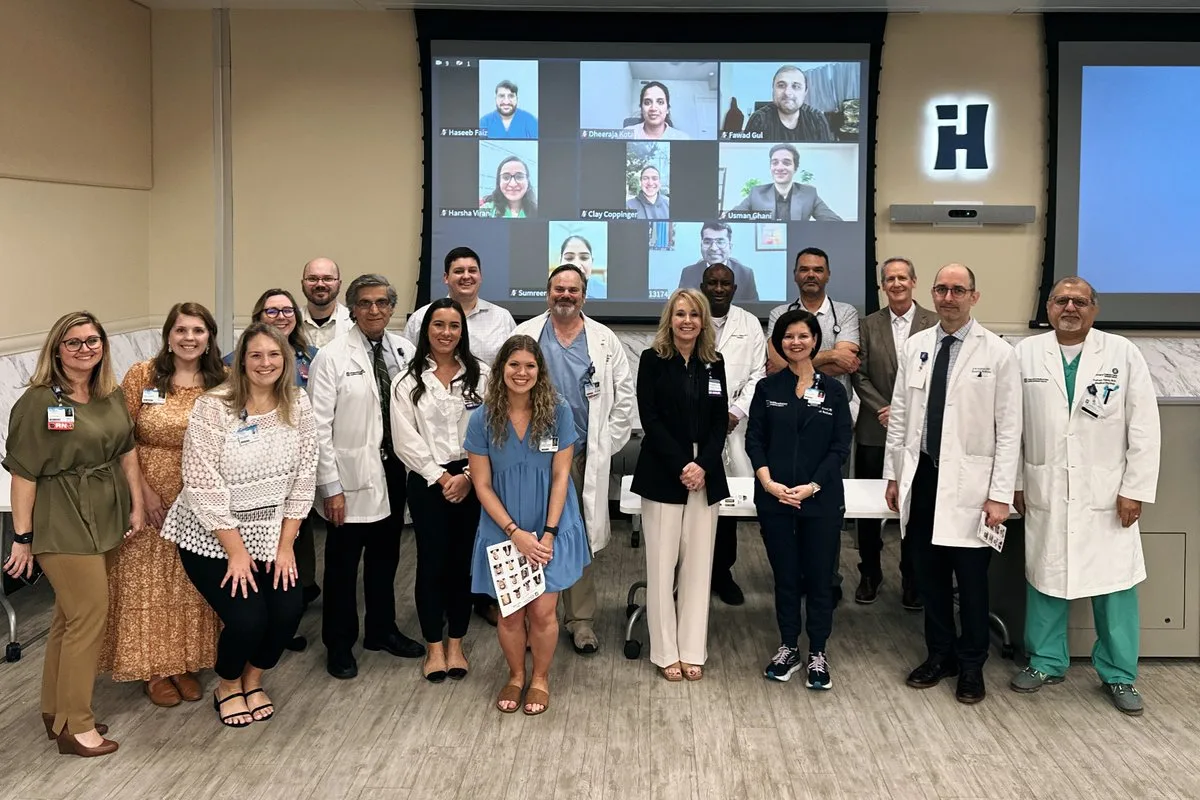
Match Day 2024: Mobile Infirmary welcomes the inaugural Internal Medicine Residency class (photo courtesy of Infirmary Health)
A Strategic Priority: Graduate Medical Education at Infirmary Health
Graduate medical education is a stated strategic priority of Infirmary Health’s leadership, and the Family Medicine Residency is the next step in a deliberate, system-wide build. In less than three years Mobile Infirmary has launched two ACGME-accredited residencies, Internal Medicine in 2024 and General Surgery in 2026, and fellowships in critical care medicine, hematology and oncology, and cardiology are now in development. Family medicine will be the third residency at Mobile Infirmary and, together with Thomas Hospital’s Internal Medicine Residency and Geriatric Medicine Fellowship, part of a growing system enterprise built to train the physicians the Gulf Coast needs and keep them here.
The program will sit at the flagship of the system. Mobile Infirmary is Infirmary Health’s largest and oldest hospital, a 689-bed medical center that U.S. News & World Report ranked the No. 3 hospital in Alabama for 2026 to 2027, with High Performing ratings in nine procedures and conditions. It is home to the system’s GME office, its Designated Institutional Official, and its established residencies, and it is where the Family Medicine Residency’s inpatient service, continuity clinic, and didactics will be anchored.
Leadership has been explicit about why. When the Internal Medicine Residency was announced, Mobile Infirmary President Susan Boudreau, FACHE, said the program “will allow us to recruit and retain more physicians to our region,” and at the launch of the General Surgery Residency she described the system’s “commitment to training future physicians for our community” as “second to none.” Thomas Hospital’s residency was launched to address the same challenge: its program director noted that only about 20 percent of university-educated doctors typically remain in the state.
Family medicine is the natural next program. Infirmary serves all of southern Alabama as well as the Florida Panhandle and southern Mississippi, holds a 54 percent healthcare market share across Mobile and Baldwin counties, and is expanding access in the rural counties to its north. In August 2026 the system received more than $5.3 million through the Alabama Rural Health Transformation Program, part of the first round of more than $144 million in statewide awards announced by Governor Ivey, to build a regional referral and technology network, a Rural Women’s Health Hub, women’s access-to-care services in Baldwin, Clarke, Conecuh, and Escambia counties, and a Rural Physician Workforce Pipeline that funds structured rural clinical rotations for internal medicine residents. A family medicine residency is the natural engine for that pipeline: it trains the full-spectrum physicians those communities need and gives Infirmary a durable source of primary care physicians for its employed network.
It is also a system that invests in its people. Forbes named Infirmary Health to its 2026 list of America’s Best Employers by State, the fifth consecutive year the health system has earned the distinction, based on an independent survey of more than 245,000 U.S. employees and more than 2 million employer evaluations. As President and CEO Mark Nix put it, “At Infirmary Health, our greatest asset is our people.”
For the founding director, that commitment is the foundation. Infirmary has decided to train its own physicians, has shown twice in three years that it can launch a program and fill it, and is investing in the primary care workforce its region needs. The Family Medicine Residency is where that investment becomes a pipeline, and its first director will shape what flows through it.
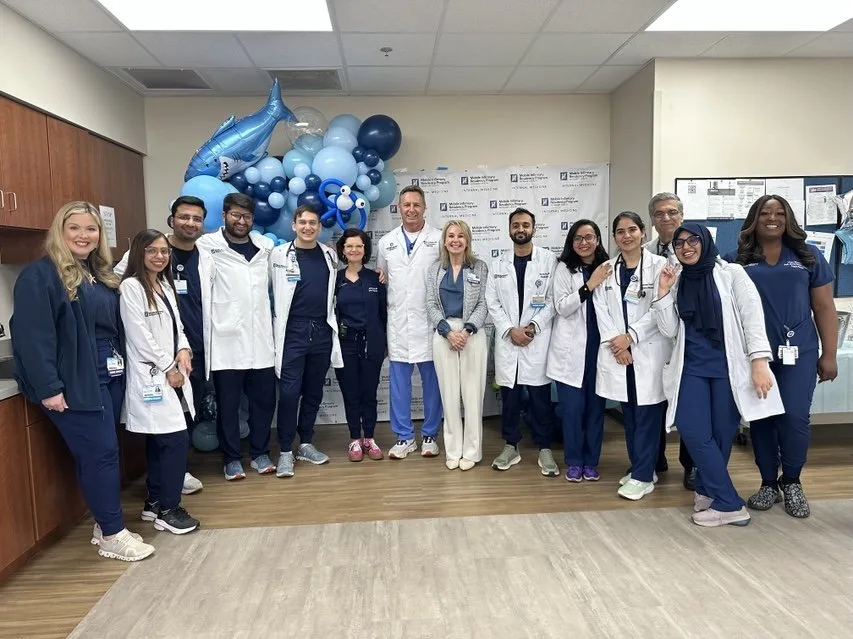
Match Day 2025: the second Internal Medicine Residency class at Mobile Infirmary (photo courtesy of Infirmary Health)
Key Responsibilities
Program development and accreditation
- Lead the development and submission of the ACGME application for the Family Medicine Residency, in collaboration with the DIO, the GMEC, the GME office, and institutional leadership.
- Guide the program through initial accreditation, site visits, and the transition to continued accreditation; prepare and submit the information required by the ACGME, including the program application and annual program updates, with the approval of the GMEC and the DIO; and maintain ongoing compliance with ACGME Institutional, Common, and Family Medicine Program Requirements and with the policies of the National Resident Matching Program (NRMP).
- Establish program policies and procedures consistent with institutional and ACGME requirements, distribute them to residents and faculty, and ensure compliance; appoint and lead the Program Evaluation Committee and the Clinical Competency Committee; and build the milestones-based assessment system.
- Report to the GMEC and executive leadership on program performance and accreditation status, including required ACGME reports and other periodic or special reports as requested.
Curriculum and clinical learning environment
- Design a full-spectrum family medicine curriculum, with competency-based goals and objectives for each rotation at each PGY level, including the inpatient family medicine service, the continuity clinic, and rotations in pediatrics, obstetrics and gynecology, emergency medicine, surgery, behavioral health, and the subspecialties, and use resident feedback and the annual program evaluation to refine it.
- Build rotation agreements and program letters of agreement with participating sites and partners across the system and region, serving as the program’s liaison with administrators, faculty, affiliated institutions, accrediting bodies, and outside organizations.
- Develop the didactic program, procedural training, and the rural and community medicine experiences supported by Infirmary’s rural health initiatives.
Faculty recruitment and development
- Recruit, appoint, orient, develop, evaluate, and schedule core and clinical faculty from Infirmary’s employed family physicians and the broader medical staff; offer members of the medical staff opportunities to participate in graduate medical education; and establish faculty development, evaluation, and teaching expectations.
- Work with the Associate Program Director and the GME office to build the coordinator and administrative support model for the program.
Resident recruitment and education
- Lead recruitment of the inaugural resident class for a target summer 2028 start, including ERAS and NRMP Match strategy, interview design, and candidate selection, in compliance with NRMP policies and procedures.
- Serve as the educational leader, mentor, and advocate for residents; ensure that evaluations draw on multiple evaluators and sources and are accessible to residents; provide each resident with documented semi-annual evaluations and feedback, certification of procedural competency, a final summative evaluation, and verification of training; and oversee remediation, wellness, and career development.
Clinical practice
- Maintain an active family medicine practice within Infirmary Medical Clinics, approximately half of total effort, serving as a clinical role model for residents and faculty.
Leadership and collaboration
- Represent family medicine within the GMEC, the medical staff, and system leadership; partner with the Internal Medicine and General Surgery program directors on shared resources and didactics.
- Contribute to Infirmary’s broader GME strategy and to the growth of primary care across Mobile and Baldwin counties.
- Serve as the program’s interface with the community, educating community leaders and partners about the value of graduate medical education and its contribution to access and quality of care in the region.
- As the program matures, oversee any educational tracks and subspecialty fellowship programs linked to the core Family Medicine Residency.
Scholarly activity
- Model and mentor scholarly activity for residents and faculty consistent with ACGME expectations, drawing on the system’s research office and academic partnerships.
Position Specifics
Ideal Candidate Qualifications
Required
- MD or DO degree from an accredited medical school.
- Current board certification in family medicine by the American Board of Family Medicine or the American Osteopathic Board of Family Physicians.
- Alabama medical licensure, or eligibility to obtain an unrestricted Alabama license before the start date, and eligibility for medical staff membership and privileges at Mobile Infirmary.
- Active registration in good standing with the U.S. Drug Enforcement Administration (DEA).
- Graduate medical education administrative experience in at least three of the last five years, meeting the ACGME requirement of at least three years of documented educational and/or administrative experience, for example as a program director, associate program director, or core faculty leader.
- Active participation as a faculty member in an ACGME-accredited family medicine residency program in at least five of the last seven years.
- Ongoing clinical activity in family medicine.
- Working knowledge of ACGME requirements, the program application and accreditation process, curriculum development, competency-based assessment, and resident and faculty recruitment.
Preferred
- Five or more years of residency leadership experience as a program director or associate program director.
- Experience in a community health system or community-based residency, as distinct from a university-based academic medical center.
- A track record of building or substantially developing a residency program, track, or curriculum, or of leading a program through initial accreditation.
- Current or recent clinical activity in maternity care and pediatrics, and training in or affinity for a broad-scope, community-based family medicine model.
- Interest or experience in addiction medicine, rural health, or primary care practice transformation.
- Demonstrated success in resident recruitment, faculty development, and scholarly activity.
- An entrepreneurial, collaborative style; comfort in a matrixed organization; and the ability to build bridges across departments, practices, and community partners.
- Interest in leading the program beyond its launch, through its first graduating class and as it matures, and in becoming an engaged member of Infirmary Health and the Mobile community.
Compensation and Benefits
Infirmary Health offers a competitive compensation and benefits package commensurate with the experience and responsibilities of a founding program director. Details will be discussed with candidates during the search process.
Reporting Relationships and Employment Structure
The Founding Program Director reports to the Designated Institutional Official, who also serves as Vice President and Chief Medical Officer of Mobile Infirmary, for all academic, educational, and program matters. Clinical practice is delivered through Infirmary Medical Clinics, the system’s employed multi-specialty physician group, with clinical reporting to the group’s executive leadership. The position is employed by Infirmary Health or an affiliated physician-employment entity designated by the system, with approximately 50 percent protected effort for program director and administrative responsibilities and 50 percent clinical practice, consistent with ACGME requirements for the approved resident complement.
About Infirmary Health
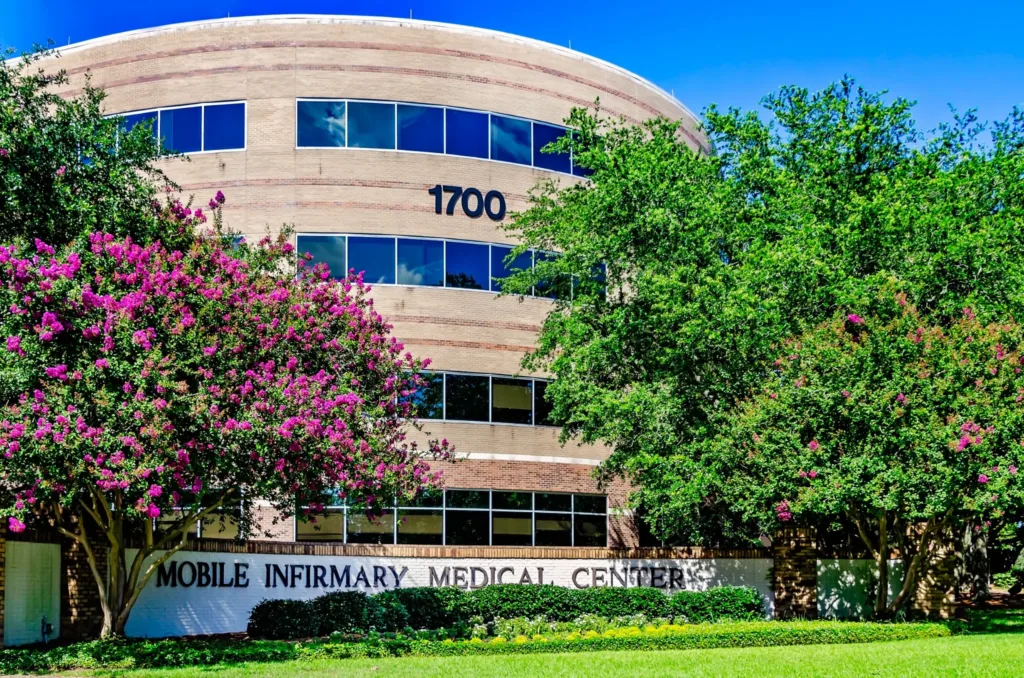
Infirmary Health is the largest non-governmental, not-for-profit healthcare system in Alabama. Its roots reach back to a community initiative begun in 1896, and its first facility, Mobile Infirmary, opened on October 21, 1910. The system today comprises four hospitals (Mobile Infirmary, Thomas Hospital, North Baldwin Infirmary, and Infirmary LTACH), two post-acute care facilities, four ambulatory surgery centers, more than 60 physician practice locations, two freestanding emergency departments, six imaging centers, two breast centers, and other affiliates. Infirmary serves all counties in southern Alabama as well as the Florida Panhandle and southern Mississippi, records more than 1.5 million patient visits each year, and holds a 54 percent healthcare market share across Mobile and Baldwin counties.
With more than 6,700 team members and more than 700 physicians on its medical staff, Infirmary is the largest private employer in the region. In September 2026 Forbes named Infirmary Health to its 2026 list of America’s Best Employers by State, the fifth consecutive year the system has earned the distinction. The system’s employed physician group, Infirmary Medical Clinics, includes Diagnostic and Medical Clinic, a physician-governed multi-specialty practice with locations across Mobile and Baldwin counties.
Infirmary Health has been affiliated with the UAB Health System since 2018, and in January 2024 the two systems entered a partnership to provide comprehensive cancer care jointly through Infirmary Cancer Care, the system’s oncology institute, and the UAB O’Neal Comprehensive Cancer Center, Alabama’s only NCI-designated comprehensive cancer center, giving Gulf Coast patients access to more than 200 clinical trials. In August 2025 Infirmary Cancer Care opened the Gulf Coast’s first multidisciplinary cancer clinic on the Mobile Infirmary campus.
About Mobile Infirmary Medical Center
Mobile Infirmary Medical Center, located at 5 Mobile Infirmary Circle in Mobile, has 689 licensed beds, including the J.L. Bedsole/Rotary Rehabilitation Hospital, and ranks among the leading hospitals in Alabama for surgical volume. U.S. News & World Report ranked it the No. 3 hospital in Alabama for 2026 to 2027, with High Performing ratings in nine areas: back surgery (spinal fusion), diabetes, heart arrhythmia, heart attack, heart failure, hip replacement, lung cancer surgery, pacemaker implantation, and prostate cancer surgery, and No. 3 in the state for rehabilitation. It is the flagship of the Infirmary Health system and the sponsoring hospital for the Internal Medicine and General Surgery residencies.
- Stroke and neurosciences. Certified by The Joint Commission as an Advanced Comprehensive Stroke Center, the highest level of stroke certification available, and recognized by the American Heart Association with Get With The Guidelines Stroke Gold Plus, Target: Stroke Honor Roll Elite Plus, and Target: Type 2 Diabetes Honor Roll awards in 2025, its 14th consecutive year of recognition.
- Heart and vascular. A hybrid operating room and cardiac catheterization lab supporting advanced cardiac and vascular procedures.
- Surgery and robotics. The first hospital in the region to offer da Vinci robotic surgery, Mobile Infirmary completed its 10,000th robotic procedure in 2021 and is the only robotic-assisted bariatric surgery epicenter in the state.
- Orthopedics and spine. Blue Distinction Center designations for knee and hip replacement and for spine surgery.
- Cancer. Infirmary Cancer Care provides surgical, radiation, and medical oncology on campus, in affiliation with the UAB O’Neal Comprehensive Cancer Center.
- Post-acute and access. The region’s only long-term acute care hospital, an inpatient rehabilitation hospital, and a freestanding emergency department in Saraland.
Living on the Gulf Coast: Mobile and the Eastern Shore

Downtown Mobile at dusk
Mobile, Alabama
Founded by the French in 1702, Mobile is Alabama’s oldest city, the capital of French Louisiana until 1720, and the birthplace of Mardi Gras in America, where the first organized celebration was held in 1703. Today more than 40 parades draw nearly a million revelers each year to a distinctly family-friendly Carnival. With a 2025 population of 200,824 following a 2023 annexation, Mobile is the second largest city in Alabama, and the metropolitan area is home to more than 411,000 people. Livability named Mobile one of its 2026 Top 100 Best Places to Live, and Condé Nast Traveler included it among the Best Places to Go in North America and the Caribbean in 2024.
The city sits on Mobile Bay at the mouth of the Mobile-Tensaw Delta, the second largest river delta in the United States and known as “America’s Amazon,” with more than 250,000 acres of wetlands and more than 300 bird species. The Port of Mobile completed a 50-foot channel deepening in October 2025, making it the deepest container terminal on the Gulf, and generated an estimated $98 billion in economic impact for Alabama in 2022, the most recent year reported. Airbus operates three commercial aircraft final assembly lines in Mobile with more than 2,000 employees, having opened its second A320 line in October 2025, and Austal USA is the region’s largest industrial employer. The University of South Alabama and USA Health together are the region’s largest employer, and a new $381 million downtown terminal at Mobile International Airport is nearing completion, with an opening now expected in early 2027 and American, Delta, and United relocating there from Mobile Regional Airport. Amtrak’s Mardi Gras Service, launched in August 2025, offers two daily round trips to New Orleans in about four hours.
Mobile’s cost of living runs about 12 percent below the national average, with housing costs roughly a third below the U.S. average; the median home sale price was about $230,000 in August 2026. The city enjoys roughly 220 sunny days a year with no snow. Cultural anchors include the USS Alabama Battleship Memorial Park, home to two National Historic Landmarks; Bellingrath Gardens and Home, 65 acres of gardens opened in 1932; the Mobile Museum of Art, the largest art museum on the Gulf Coast between New Orleans and Tampa; the Mobile Carnival Museum; and the Saenger Theatre, home of the Mobile Symphony. Dauphin Island is about 45 minutes away, Gulf Shores about 75 minutes, Orange Beach about 90 minutes, Pensacola about an hour, and New Orleans about three hours.
Mobile County Public Schools is Alabama’s largest public school system, with nearly 60,000 students, two International Baccalaureate high schools, 13 National Blue Ribbon Schools, and 12 Signature Academies, and the area has more than 40 private schools. Niche’s current rankings of the best private high schools in Mobile County place St. Paul’s Episcopal, UMS-Wright, St. Luke’s Episcopal, and McGill-Toolen Catholic at the top, each with an A grade.
Fairhope and the Eastern Shore

Across Mobile Bay, the Eastern Shore of Baldwin County is one of the most sought-after places to live in the Southeast. Fairhope, with a 2025 population of 26,625, grew 16.6 percent between 2020 and 2025 and was ranked among Alabama’s fastest-growing cities; Southern Living placed it on its 2026 list of the South’s Best Small Towns, praising its “ethereal live oaks and pastel-colored bungalows.” The town’s 1,448-foot municipal pier, rose garden, downtown shops and galleries, and the Fairhope Arts and Crafts Festival, which draws artists from across the country each March and marks its 75th anniversary in 2027, define a walkable, arts-oriented community. The Grand Hotel at Point Clear, opened in 1847 and known as the Queen of Southern Resorts, anchors the bay front with Lakewood Golf Club on the Robert Trent Jones Golf Trail. Neighboring Daphne, one of the largest cities in Baldwin County, and Spanish Fort round out the Eastern Shore, and Thomas Hospital in Fairhope and North Baldwin Infirmary in Bay Minette extend Infirmary’s footprint across the bay.
Baldwin County’s population reached 267,761 in 2025, growing at nearly four times the state average, and the county held four of the five fastest-growing cities in Alabama in the latest estimates. Baldwin County Public Schools carries an A- rating from Niche, and Fairhope High School is rated A and ranked among the top 15 public high schools in the state. The commute from Fairhope to downtown Mobile is about 35 to 40 minutes across the Bayway, and ground was broken on October 2, 2026, for the $3.2 billion first phase of the Mobile River Bridge and Bayway project, a six-lane cable-stayed bridge and a Bayway expanded to three lanes in each direction.
Beaches and the outdoors

The white-sand beaches of Gulf Shores and Orange Beach, about 75 minutes from Mobile Infirmary
Gulf Shores and Orange Beach were named the No. 2 beach destination in the South in Southern Living’s South’s Best Awards published in 2026, and in 2025 Gulf Shores ranked No. 2 among U.S. News Best Family Beach Vacations while the Hugh S. Branyon Backcountry Trail was named the No. 1 recreational trail in USA Today’s 10Best awards. Dauphin Island, the Mobile-Tensaw Delta, and Mobile Bay offer year-round fishing, sailing, kayaking, and birding within an hour of the hospital.
How to Apply
Infirmary Health has retained Academic Med to conduct this strategically important search. The search is led personally by Gentry Zacheis and Jim Hagood. Interested candidates and nominators should submit a curriculum vitae and a letter of interest to Gentry Zacheis, President & CEO, at ge****@**********ed.com, or to Jim Hagood, Co-Founder and Managing Director, at ji*@**********ed.com. All inquiries, nominations, and applications will be handled in confidence.
Gentry Zacheis, President & CEO, Academic Med | ge****@**********ed.com | 214.396.5124
Jim Hagood, Co-Founder and Managing Director, Academic Med | ji*@**********ed.com
Equal Opportunity and Nondiscrimination
It is the policy of Infirmary Health and all affiliated companies to provide equal employment opportunity without regard to race, gender, sexual orientation, color, age, disability, religion, national origin, veteran status, genetic information, gender transformation or sexual orientation. The policy applies to all areas of employment including recruitment, hiring, training and development, promotion, transfer, termination, layoff, compensation, benefits, and all other conditions and privileges of employment in accordance with applicable federal, state, and local laws.